


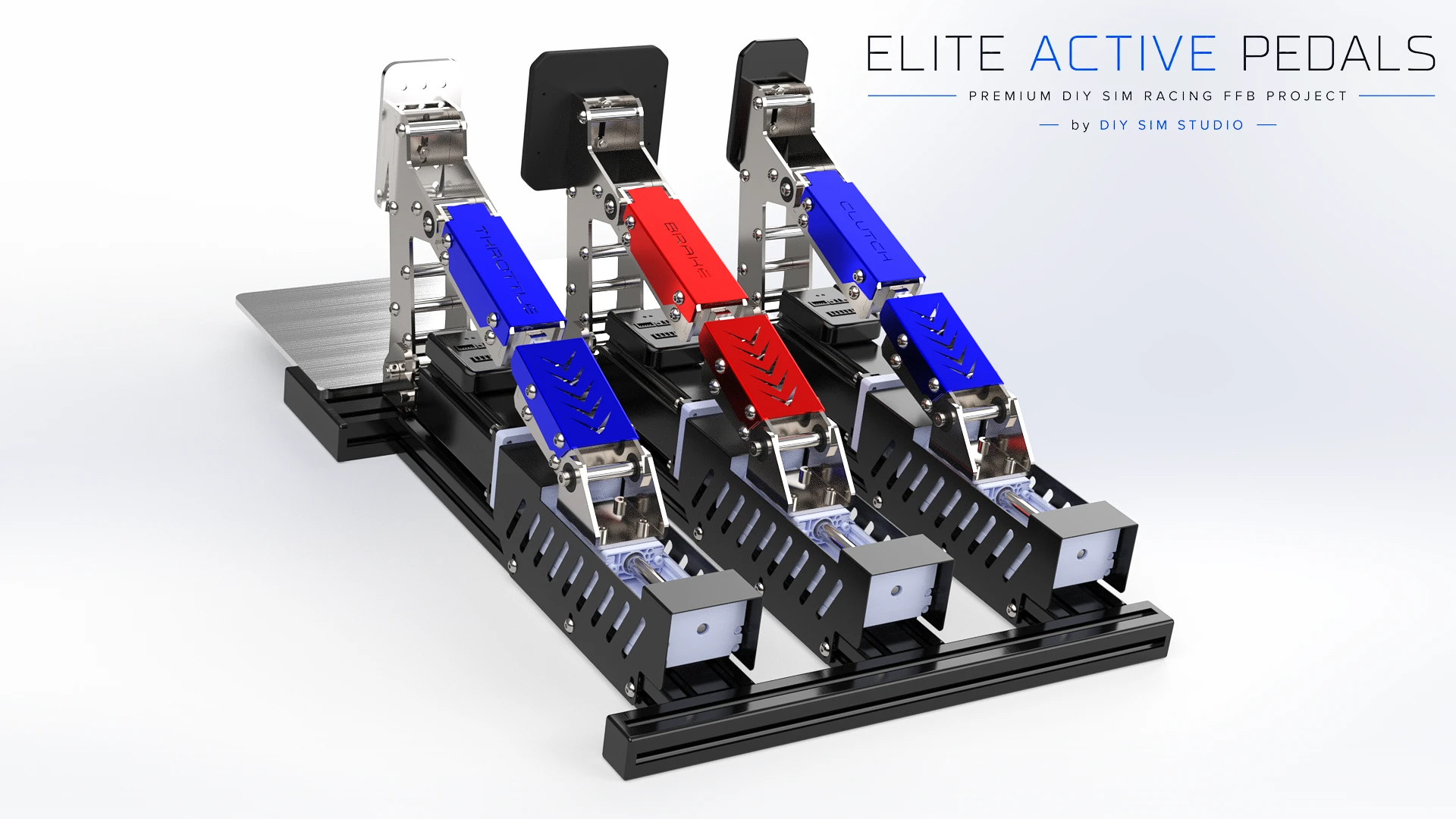
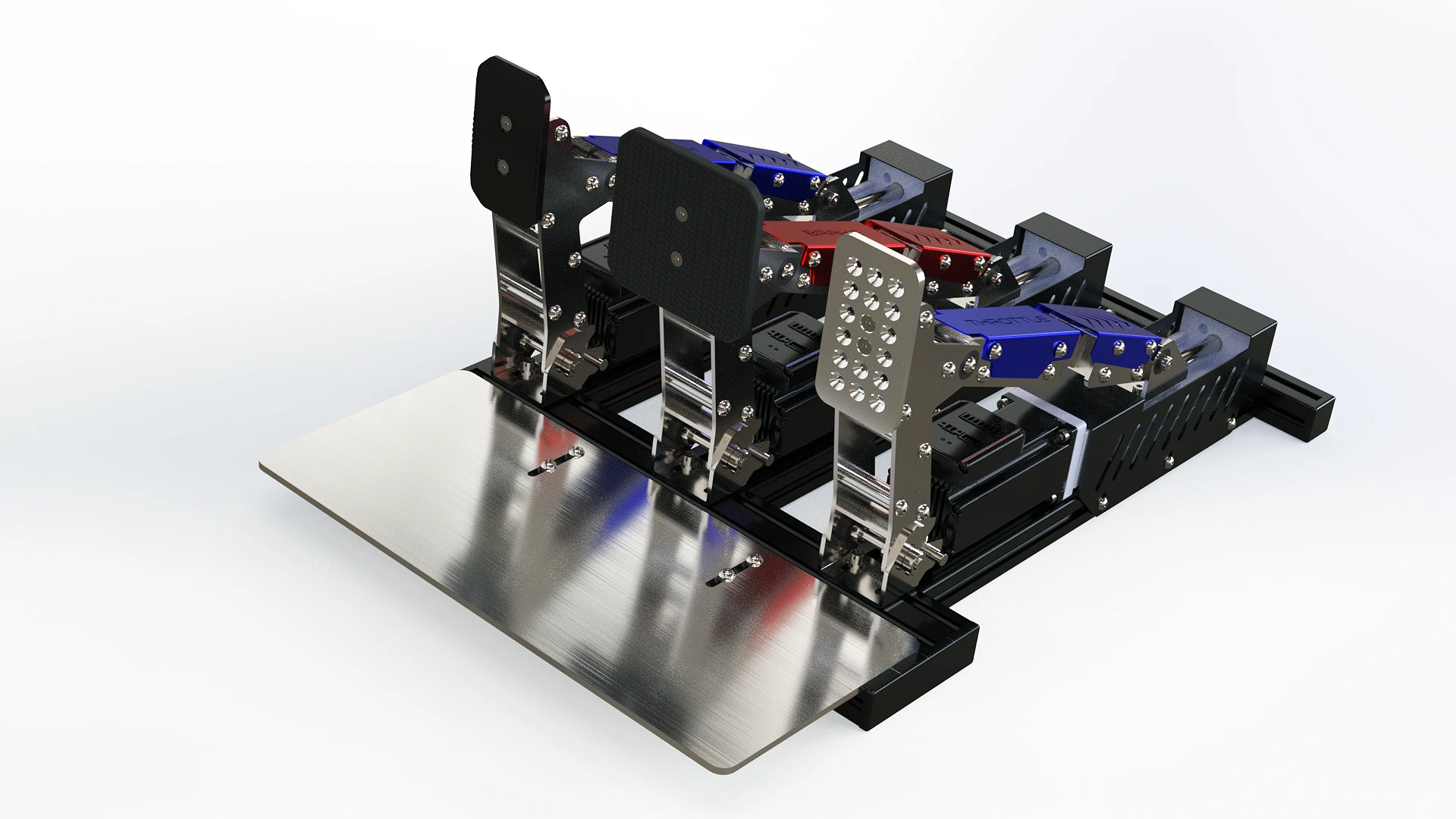
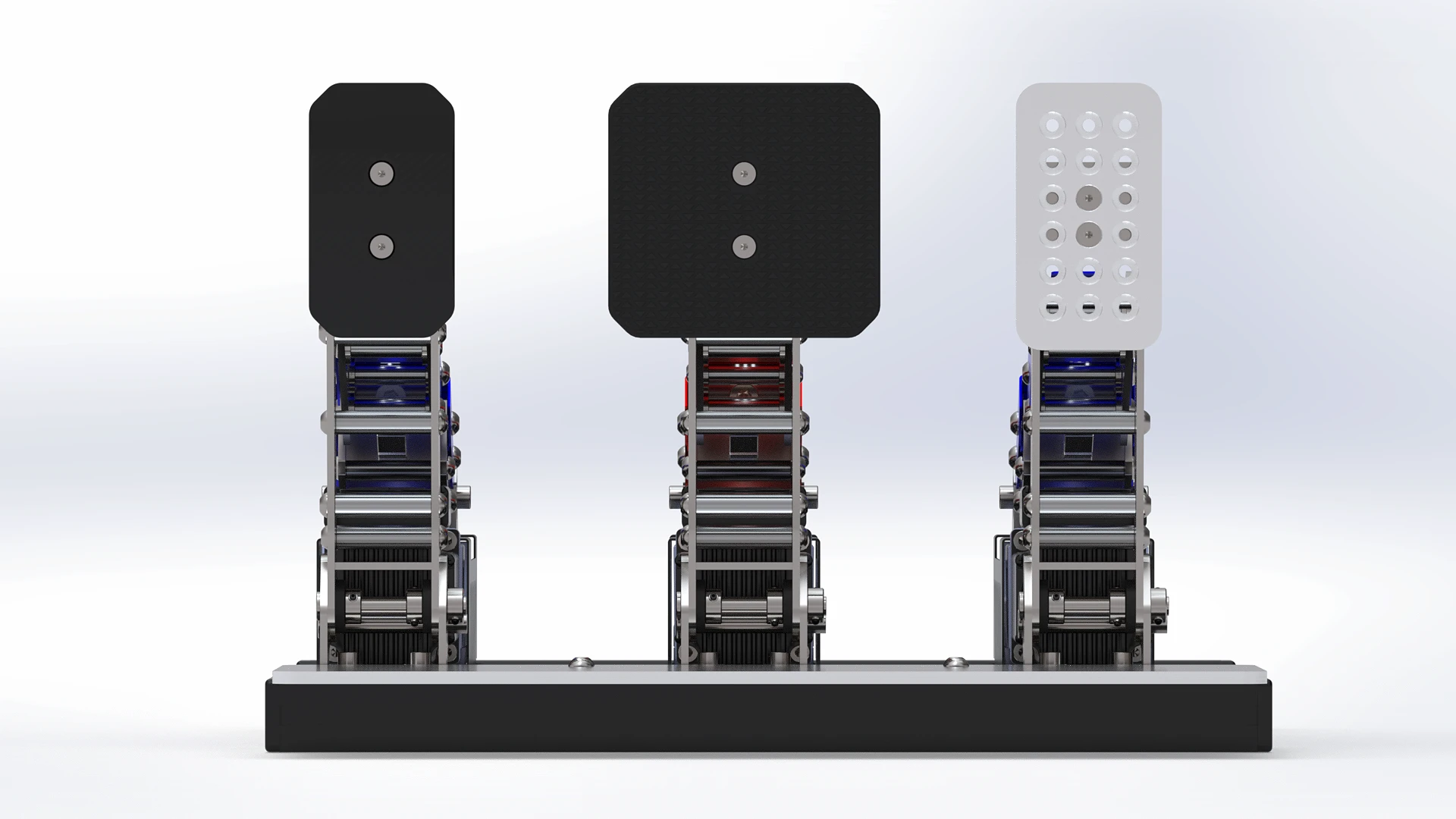
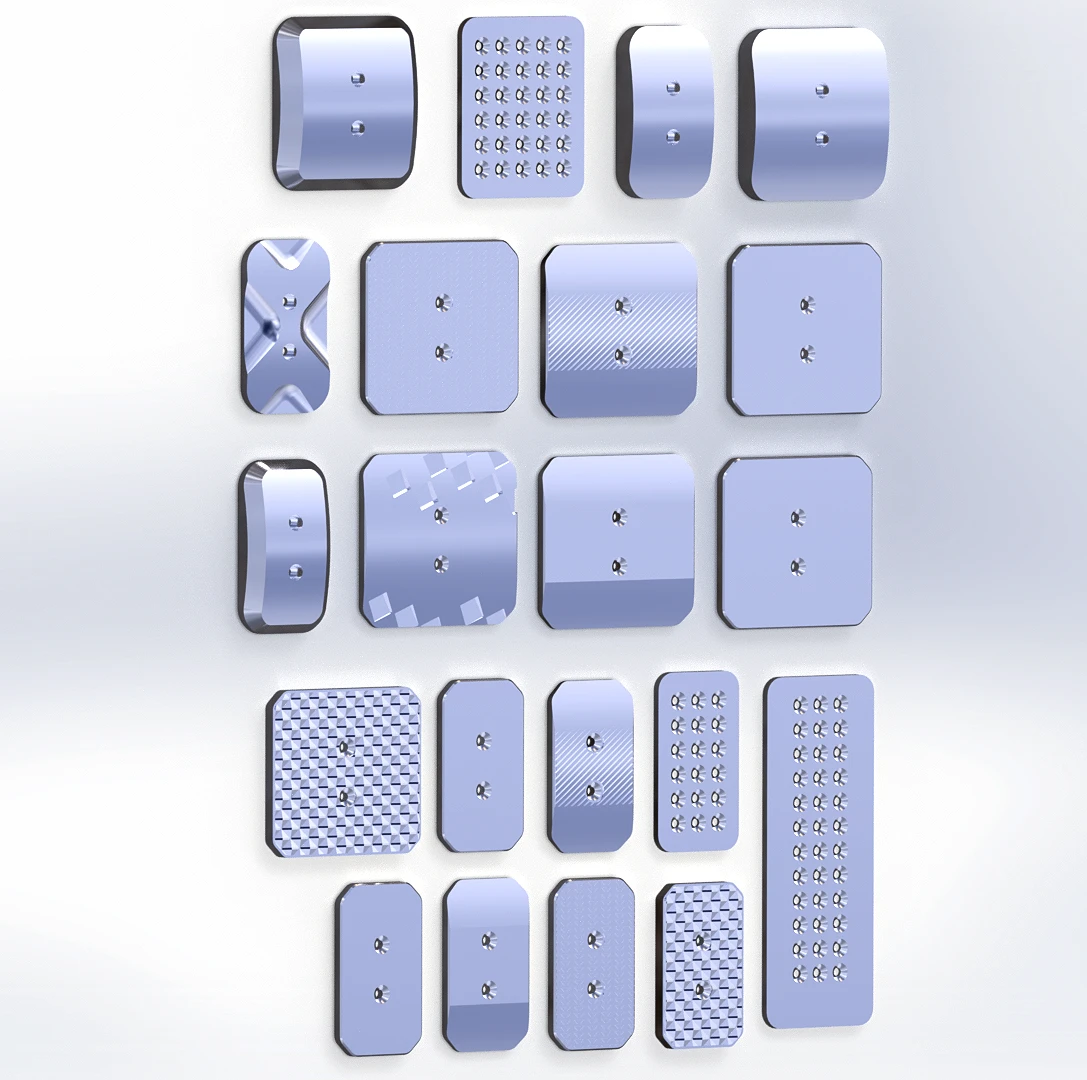
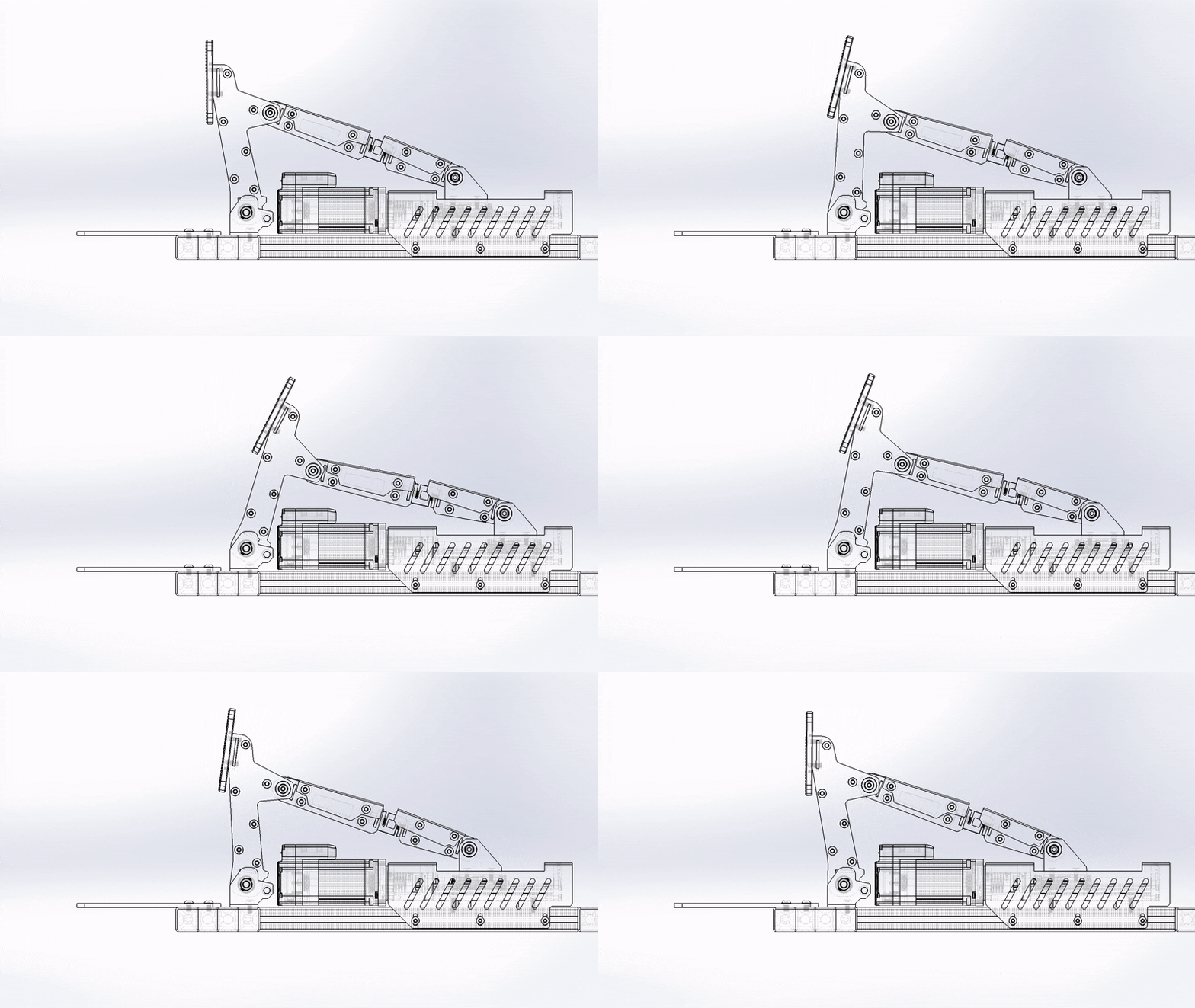
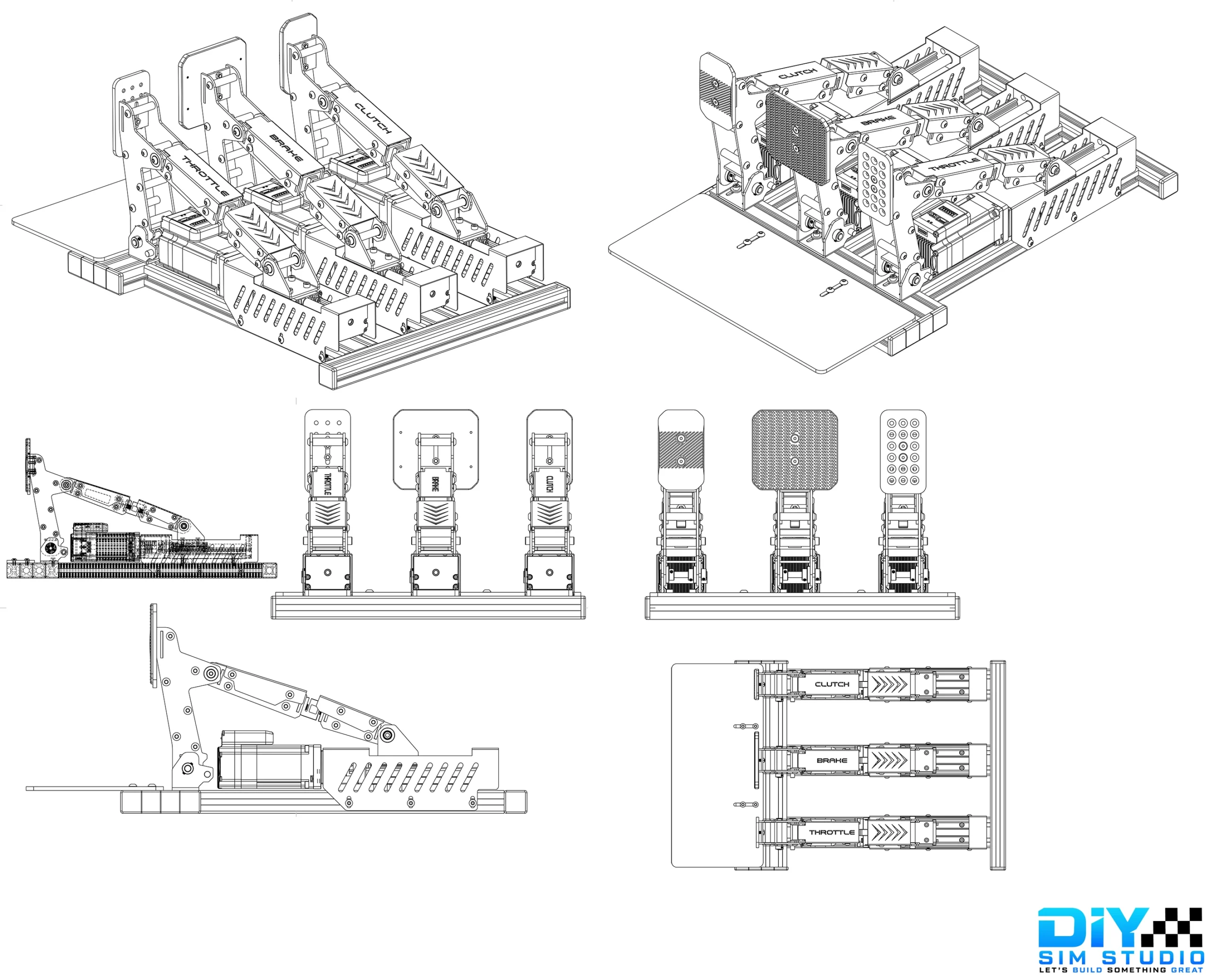


Description
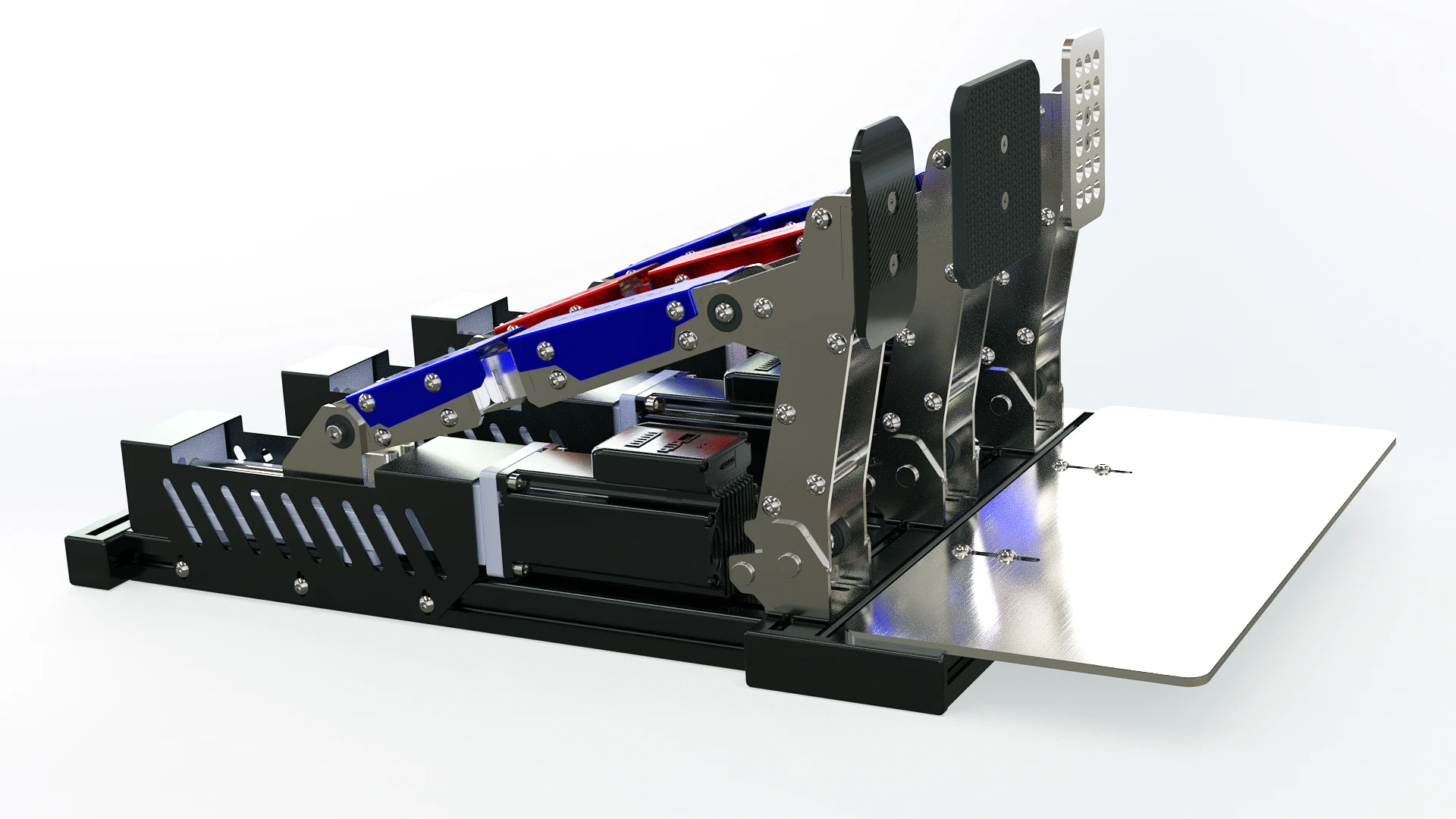
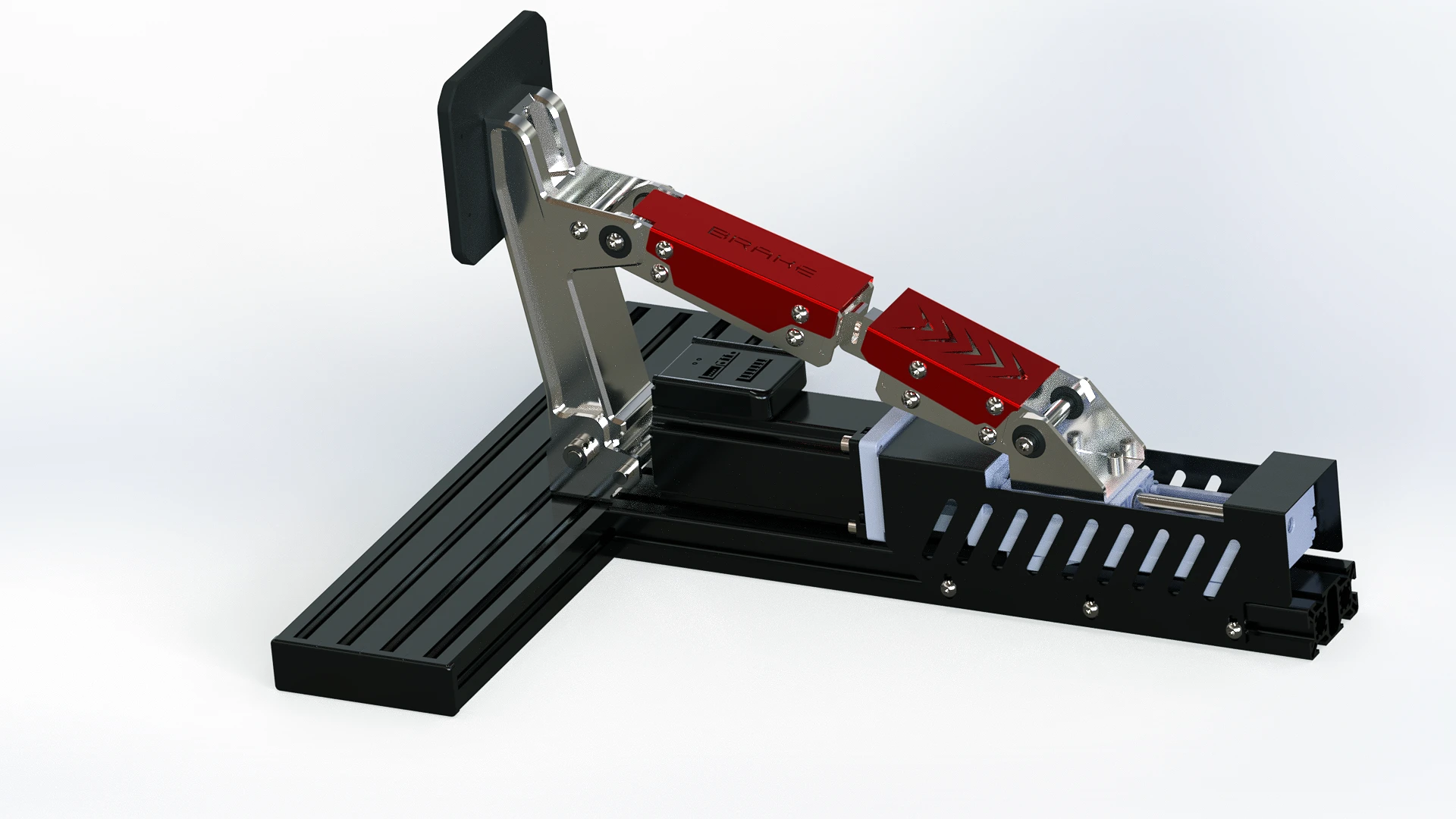
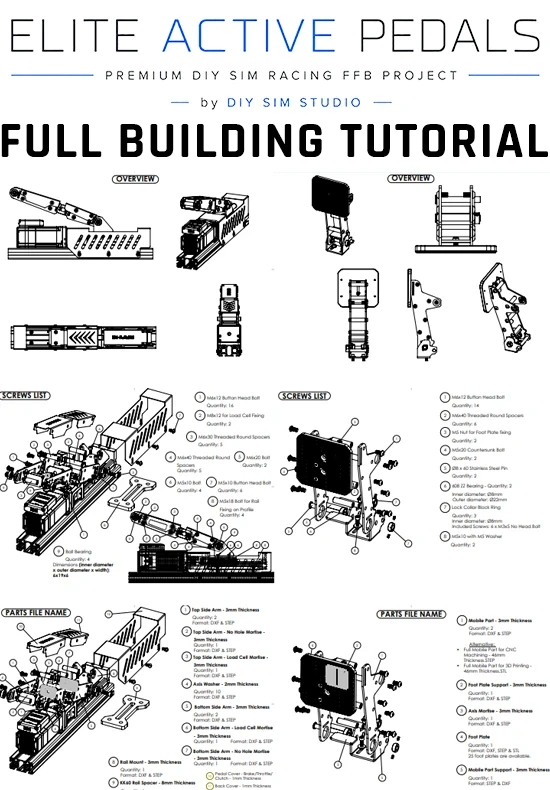
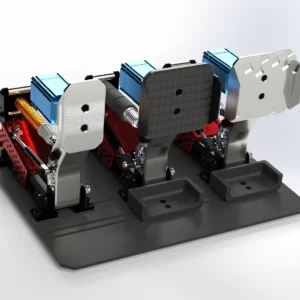
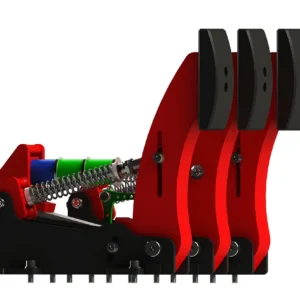
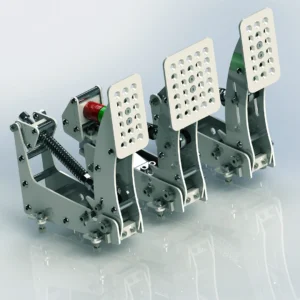
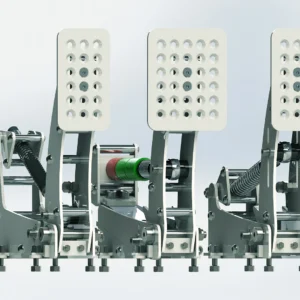
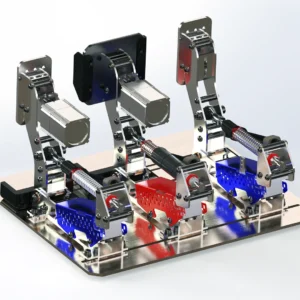
It is primarily constructed from 3mm-thick Stainless Steel laser-cut parts joined using M6x40 or M6x30 threaded round spacers.
Some parts require bending, but these involve only simple 90-degree bends. A few parts are 2mm and 1mm thick.
Alternative parts are also available in STEP and STL formats.
You should start by finding a supplier that offers affordable laser cutting and bending services.
Alternatively, JLCCNC’s “Sheet Metal Fabrication Services” is a great option in terms of pricing and production speed.
There are also several 3D-printable parts available that could help you cut costs—such as M6x40 or M6x30 connectors. You can find all of them in STL format.
For files intended for Stainless Steel laser cutting or CNC machining, the tolerance is 0.2 mm.
For 3D printing, it is 0.5 mm.
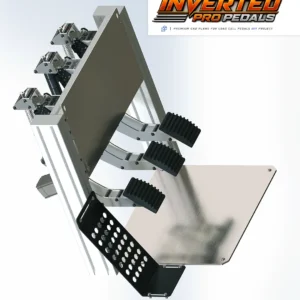
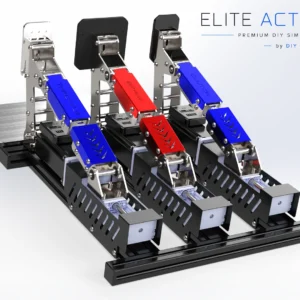
We recommend using the 30-series profile (30×30, 30×60 & 30×100).
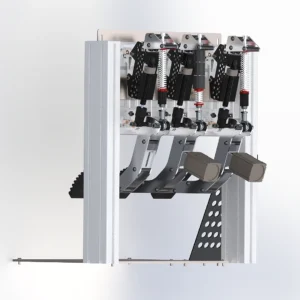
For the pedal assembly itself, ideally you need two 400mm-long profiles — one 30×30 and one 30×100 — plus a 400mm-long 30×60 profile for each pedal.
Of course, these profiles will need to be secured using 3030 angle brackets and the side covers.
However, you are free to choose a different profile; these dimensions are not mandatory.
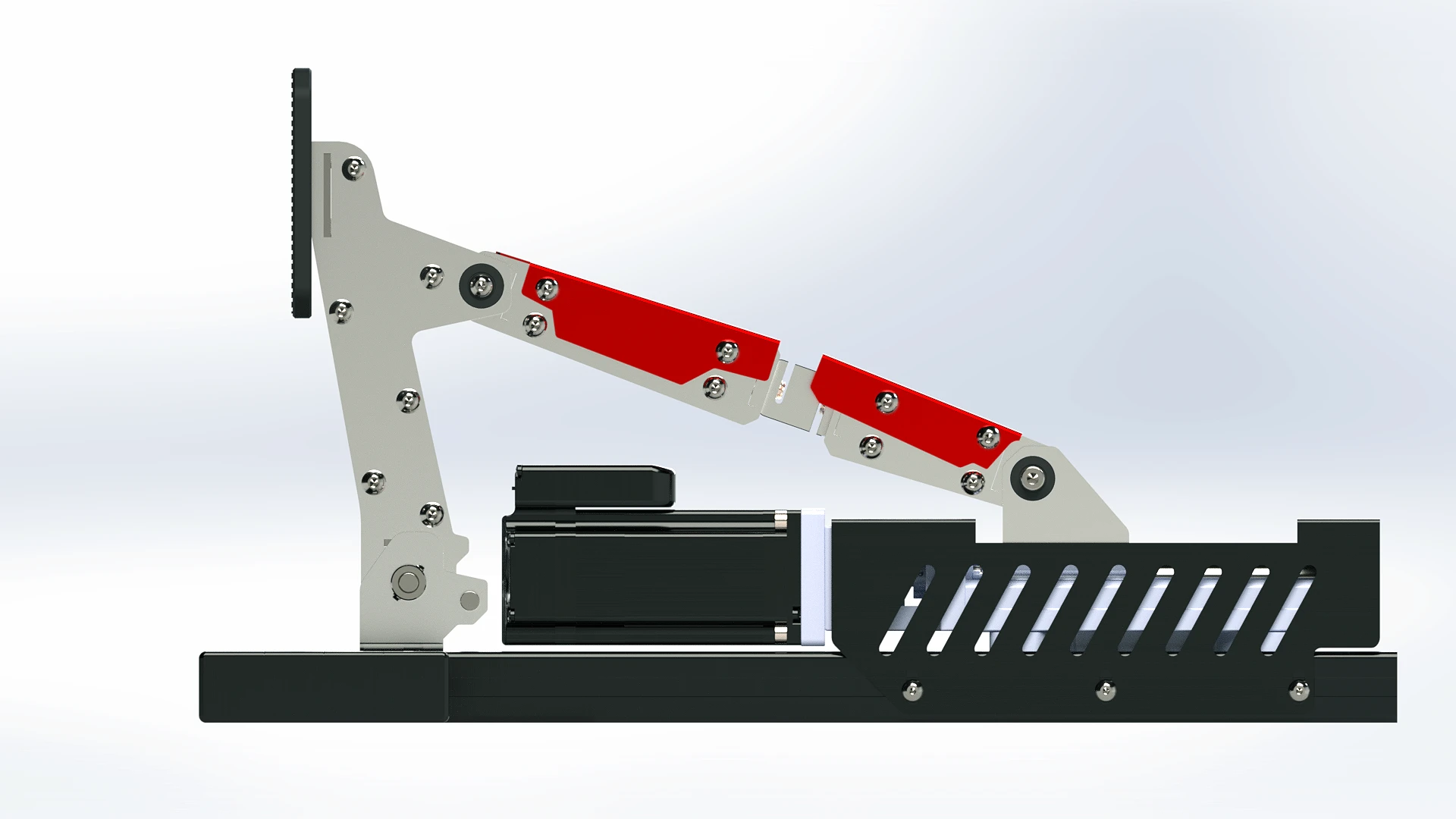
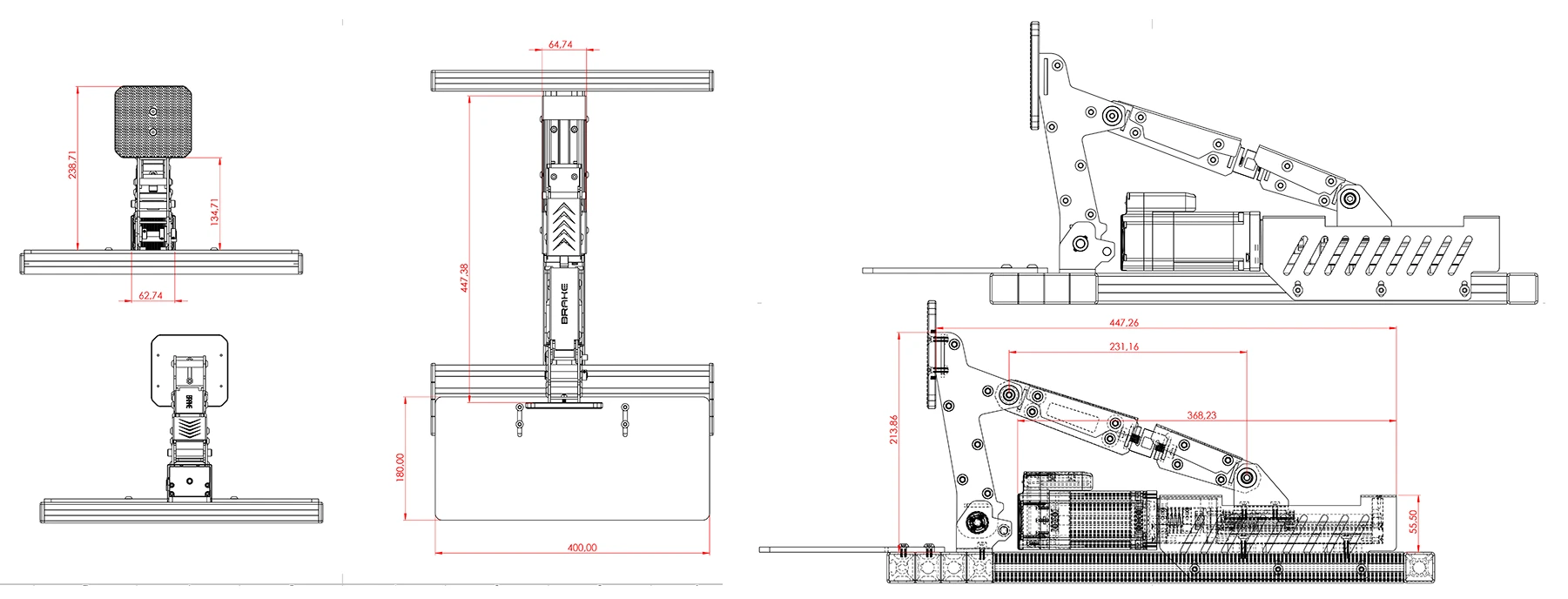
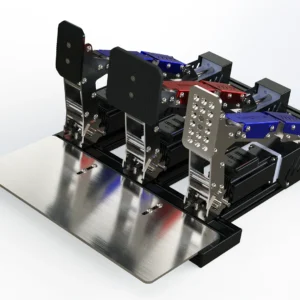
A pedal measures 238 mm in height (including the footrest) and 213 mm without the footrest.
The width is 62 mm, and the total depth — including the motor and ball screw — is approximately 447 mm.
An image showing the dimensions is available directly on the product page.
You can find the dimensions in the “Full Pedal Overview.pdf” file, located in the “Building Guide – A3 PDF Sheet” folder.
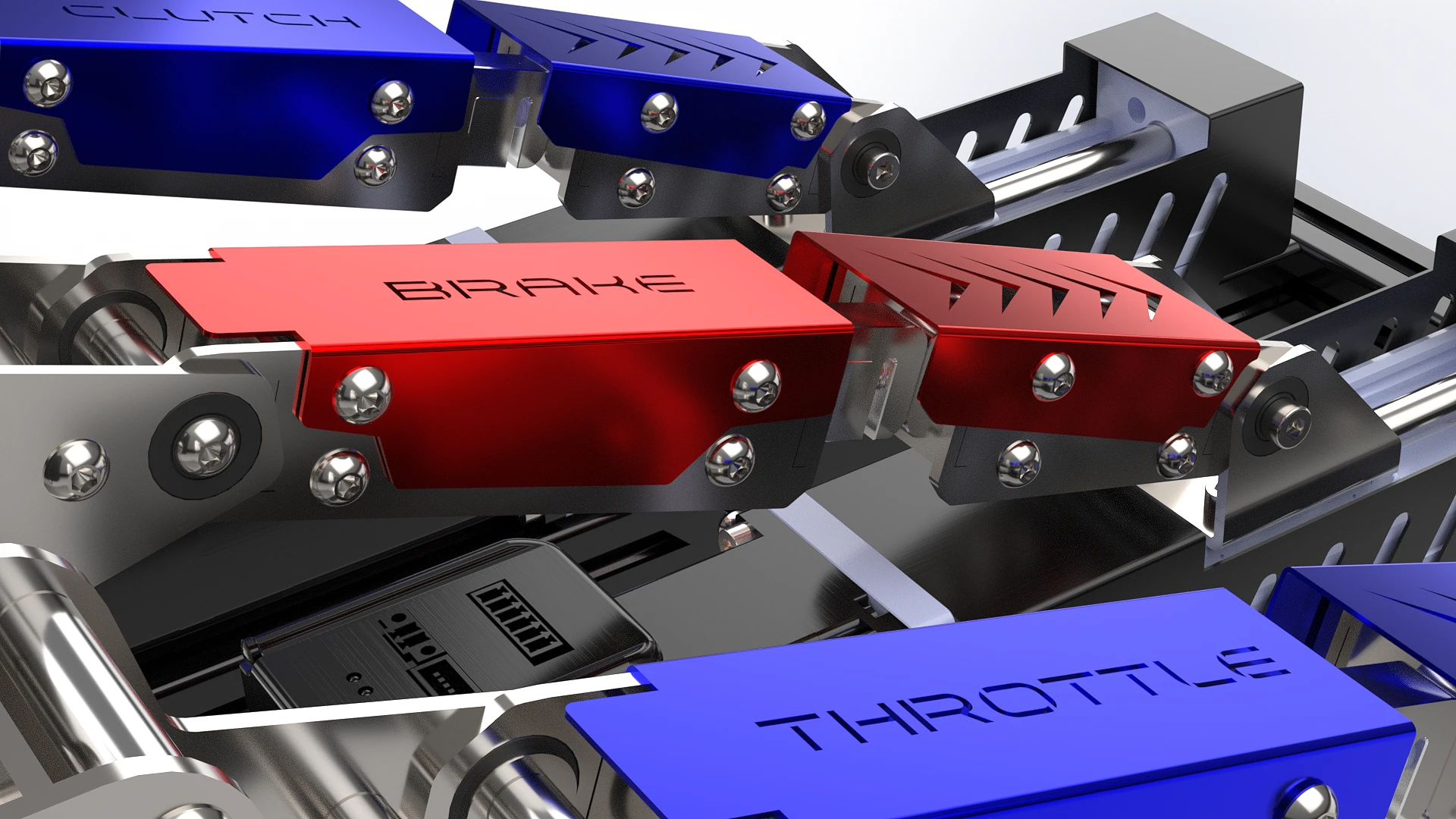
No! The Cover are purely optional. It was designed to give the pedal set a “Pro-Racing” look. The pedals are 100% structurally functional without it. You can choose not to install it for a more “industrial/raw” look.







Reviews
There are no reviews yet